WHAT WE DO
WHAT WE DO IN NORHyWAY
NORHyWAY is built around a clear proposition: that green hydrogen can become commercially viable at scale, across multiple sectors, competing with fossil fuels on price. Four interconnected use cases turn hydrogen production, shipping, road transport and grid power into a complete, self-sustaining ecosystem, connecting the Arctic to central Europe.
Together, they represent close to €1 billion in investment and could lead to up to 1,552 person-years of work across the country, a blueprint the project aims to make transferable to other regions and other hydrogen valleys.
01
Blue Economy
Blue Economy develops hydrogen production and a bunkering solution that does not yet exist in the market, designed to be replicated as the concept expands to new locations.
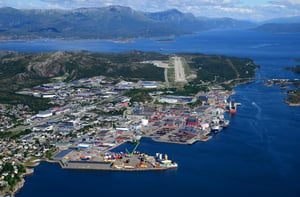
GreenH is developing a 12.5 MW hydrogen production plant in Kristiansund, designed from the outset for modularity and replication at other planned sites, Slagentangen in the south, Hammerfest in the north, Rogaland and Sandnessjøen. The plant will form part of a complete infrastructure for hydrogen production, storage and bunkering at coastal hubs along the Norwegian coast, offering hydrogen to the maritime sector, local industry and transport at a price that can compete with fossil fuels.
NEVEL contributes expertise in industrial waste heat recovery, improving overall system efficiency. Lessons from the work are shared with other hydrogen valleys across Europe through the North Sea Circle collaboration.
02
Implementation of Maritime H2
Implementation of maritime H2 streamlines the approval process and safety standards for hydrogen-powered vessels, and builds on lessons learned to deliver the next vessel.
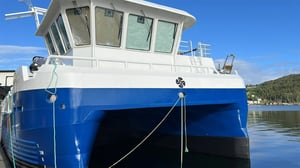
Implementation of maritime H2 works to streamline regulatory approval for hydrogen-powered vessels. The use case builds on the experience of Pilot E, Moen Marin's existing hydrogen-powered work vessel for the aquaculture industry, one of the earliest demonstrations of a complete maritime hydrogen value chain in Europe, but not itself part of NORHyWAY.
An international collaboration platform connects shipbuilders, shipowners and bunkering operators to align the value chain and enable more streamlined deployment. Building on the lessons from the previous vessel, the use case is designing a new generation of hydrogen-powered service vessels adapted to North Sea conditions.
03
Road Transport
Road Transport deploys hydrogen refuelling infrastructure and scales it into a fully operating corridor, growing the number of users and trucks, and proving hydrogen can compete on price.
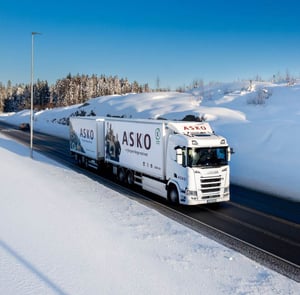
Road Transport is establishing a hydrogen transport corridor between Trondheim and Oslo, with replica corridors planned northwards to Bodø and eastwards towards Sweden, connecting the Arctic region to European markets. ASKO is upgrading its existing hydrogen refuelling station, while VIREON develops new stations, all operating at 700 bar to serve heavy-duty trucks.
ASKO brings operational experience from running hydrogen-powered trucks in live logistics since 2020, and together with NH Transport, the partners are deploying additional hydrogen-powered Scania trucks, integrating hydrogen directly into day-to-day freight operations. The corridor approach improves utilisation of infrastructure and contributes to a scalable market for hydrogen in heavy-duty road transport.
04
Flexible Grid
Flexible Grid explores the business case for hydrogen grid balancing, then pilots it through a live installation.
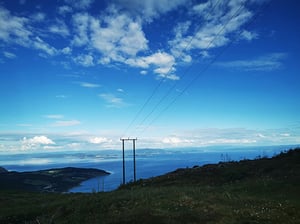
Flexible Grid explores how hydrogen can be used to produce local electricity when the grid needs it. Surplus renewable electricity can be converted into hydrogen via electrolysis, stored, transported, and later efficiently re-converted into electricity using fuel cells. This will provide grid balancing services that can be traded in energy markets.
The first step is to assess the commercial feasibility of this approach across different potential pilot configurations, evaluate business models, identify the most suitable location, and select the optimal technical solution, before moving towards a Final Investment Decision for a pilot installation. Once built, the pilot will be operated and monitored over a two-year period to validate the business case for larger-scale deployment.
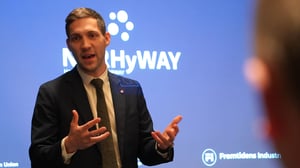
"I believe this project, in many ways, is what has been missing to unlock the potential that exists in the next phase of the energy transition we are entering."
Andreas Bjelland EriksenMinister of Climate and Environment, Norway